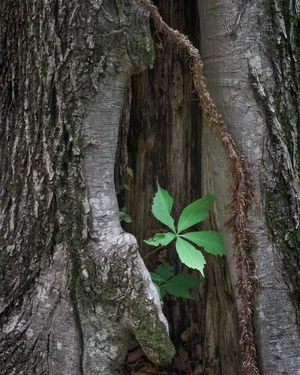
Mornings of Stillness: How a Local Mountain Resets My Rhythm
Kindly published by the Slow Photography Movement in May 2026.
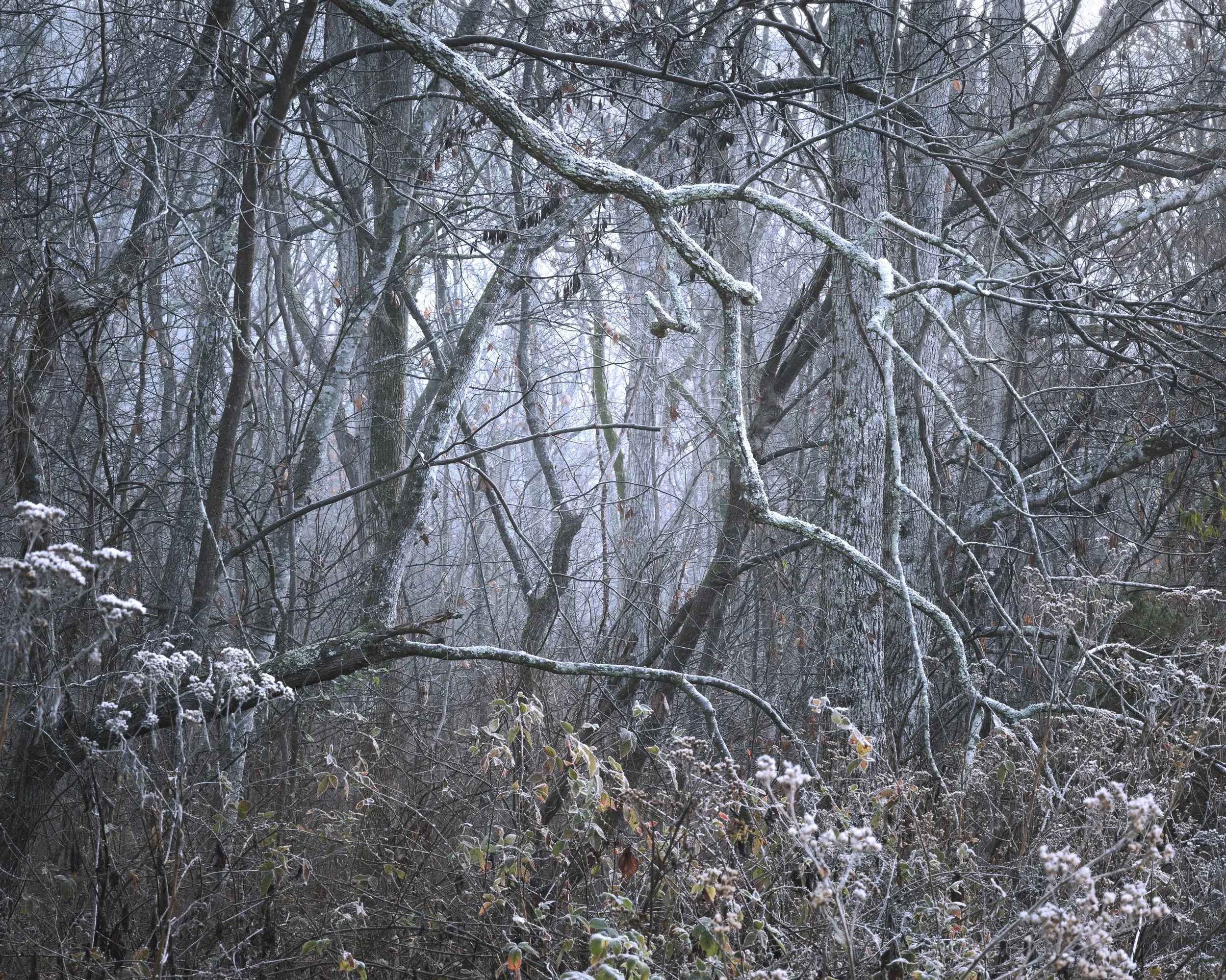
Bygone, 12/7/26
The Choice in the Kitchen
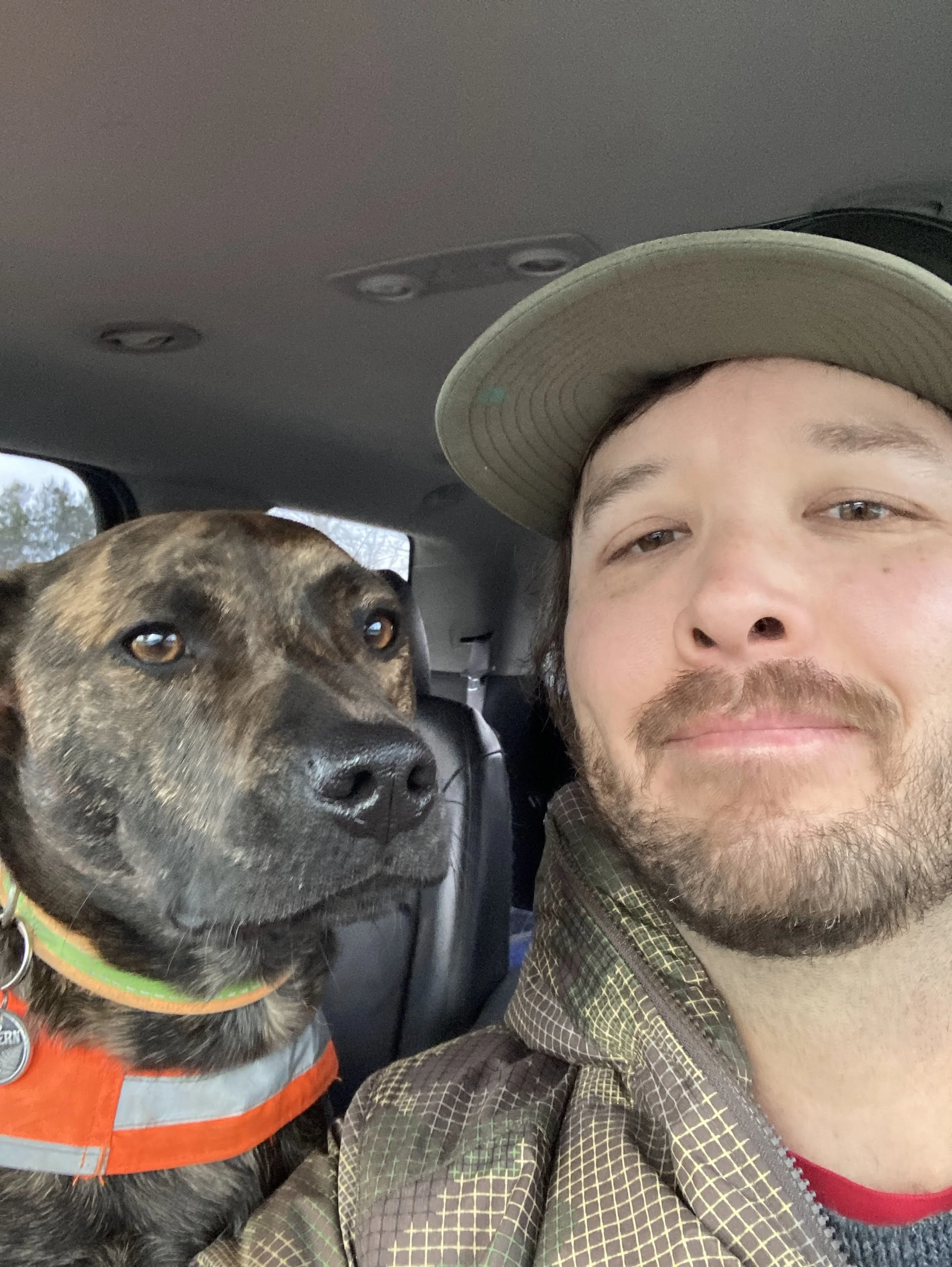
I don’t need an alarm to get me out of bed at 5:30 AM. I’ve already been awake, fidgeting and readjusting, hoping to find a position comfortable enough for sleep to return. My restless movement has stirred our 1½-year-old puppy, Fern, so now she’s also reached the “point of no return.”
With dawn just around the corner and a subtle current of job-related cortisol pumping through my veins, I know there’s no point in trying to doze off again. It’s not in the cards, so I roll out of bed and walk into the dark kitchen, instinctively heading for the refuge of the coffee maker.
As I reach into the cabinet for a mug, I’m faced with my first conscious choice of the day. One mug is a cheap ceramic souvenir that I routinely sip while I work at my computer. The other, my insulated travel mug, is dented and scratched from years of use, imbued with memories of places I’ve visited.
Muscle memory sends my hand toward the standard option, a comfortable companion for navigating emails and reconciling the stubborn demons that interrupted my sleep. But I stop. A glint of light catches my eye - the metallic rim of the travel mug. I hesitate, draw a deep breath, and reach instead for the worn companion. Exhaling, I know it’s a better fit for a morning outside. The decision is made.
It doesn’t take long to gather what I need: my camera and lenses, a few filters, a backpacking stove, water, snacks for Fern. Now in motion, the urgency that seemed overwhelming just minutes before begins to fade into slow, steady movement. As the first blue light glows above the mountain across the valley where we live, Fern and I are off.
The Aimless Path: Moving with the Landscape
After forty-five minutes of driving, steam continues to roll off the top of my travel mug as we pull onto the dirt and gravel road that takes us deep into the woods of Northwest Georgia. We then start our hike up an obscure mountain - a place I’ve visited for nearly twenty years - located on the edge of the Cumberland Plateau, where the sandstone cap is older than the mountains themselves.
Unlike the jagged peaks out West, these ridges seem hunched and weary, smoothed down by millions of years of Appalachian rain. It’s a landscape that doesn't demand attention through drama or height, but through the unnoticed persistence of abundant life and moss-covered grit.
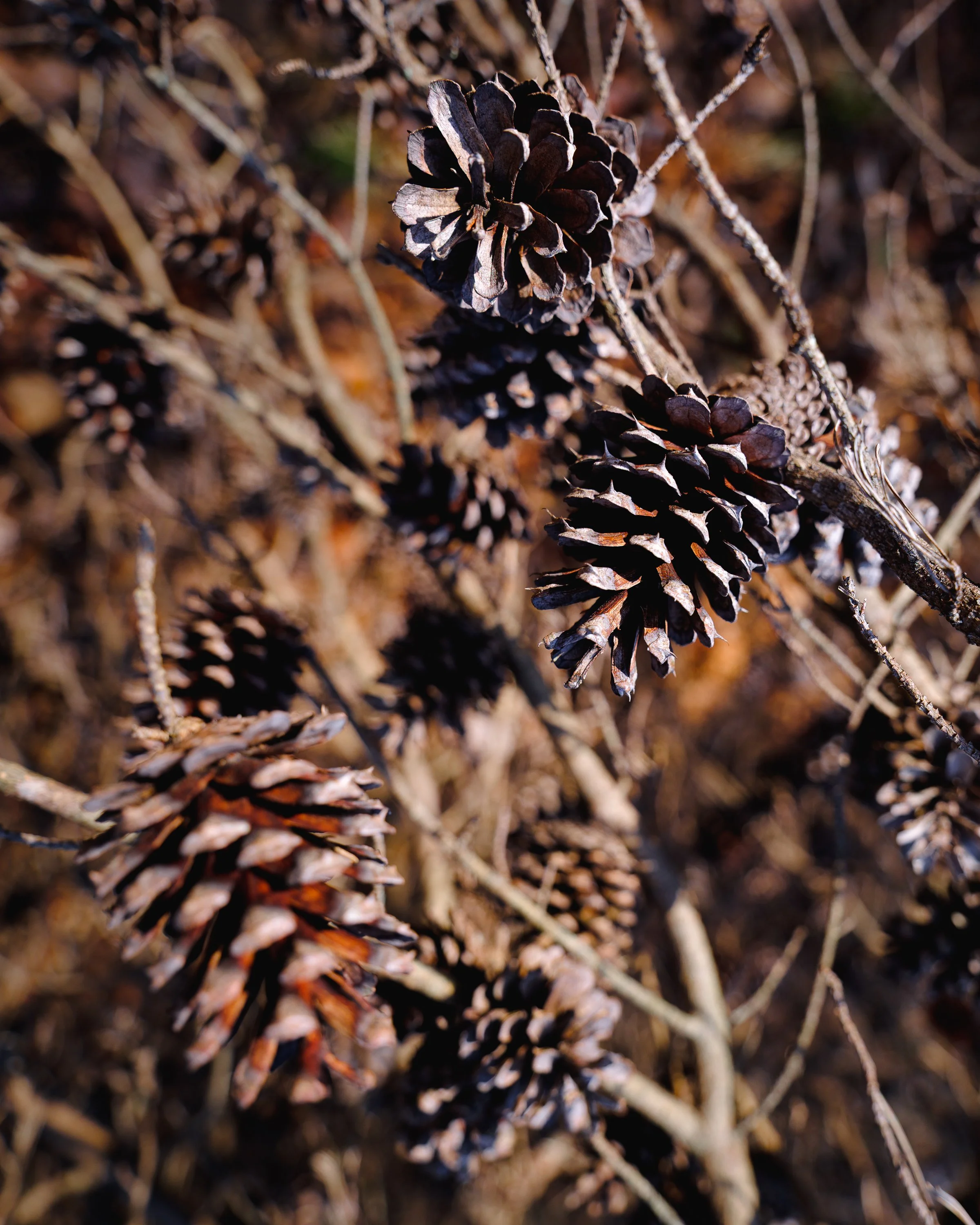
Humbler, 3/6/26
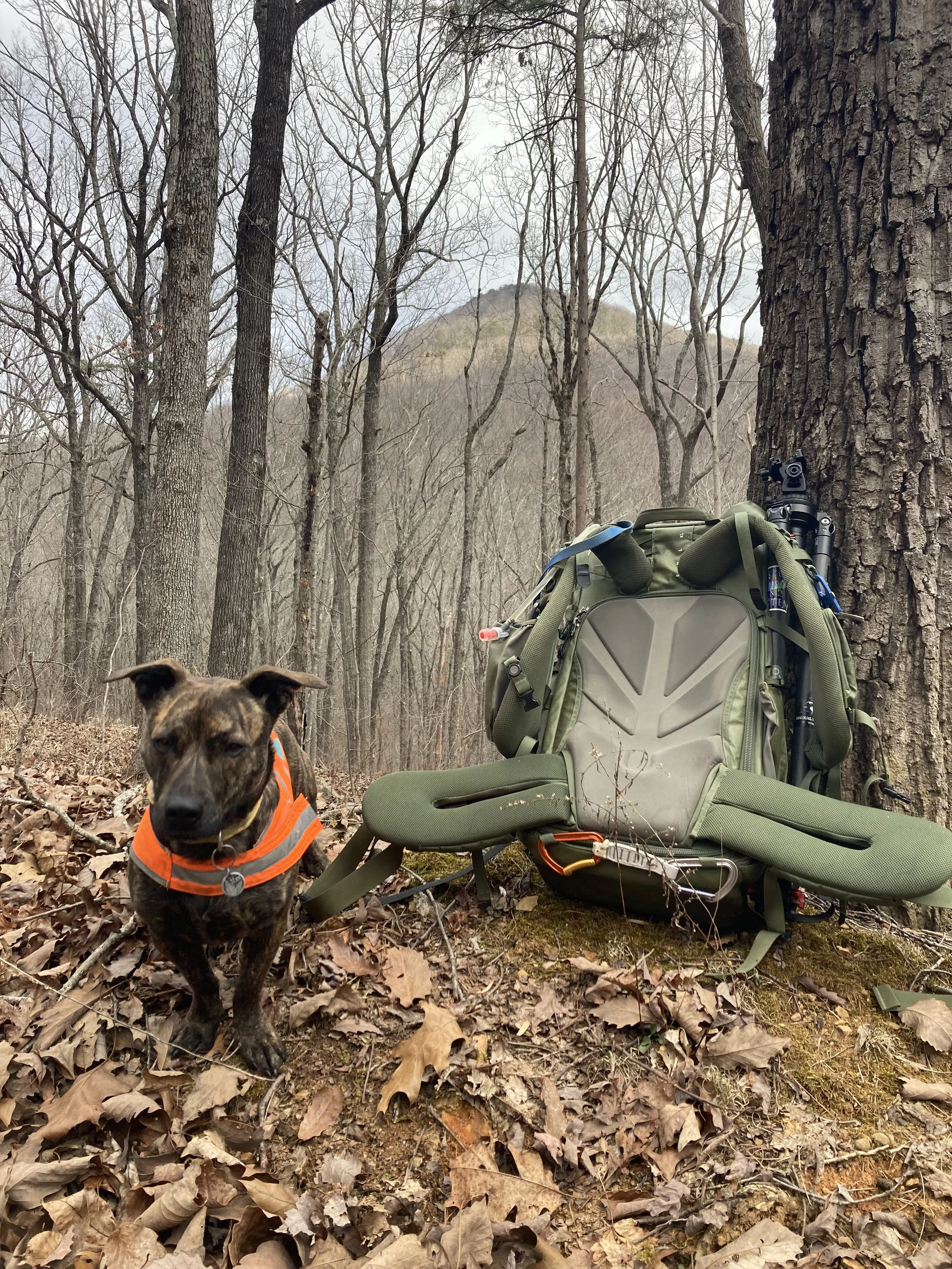
My anxiety has calmed, and I’m glad to see the morning’s first direct light cast golden warmth over the surfaces of splotchy boulders and trunks of oaks, maples, and hemlocks. We wind our way up the side of the familiar mountain. It’s become a spiritual and emotional refuge for me - a "home away from home" where the depth of connection, when I let it, helps me see past the immediate and into a longer timescale.
Cold air fills my lungs as we walk. Fern comically bounces through the understory, her excited curiosity bringing a jealous grin to my face. Leaves crunch under my boots, and I can’t help but laugh at myself. The urgent logic of my work life vaporizes under the broader context of this place and the time it holds.
Many photographers begin their hikes with a "trophy" location in mind, but today I’m hiking aimlessly, intentionally reframing the competitive attitude that drives so many of us photographers to more “winnable” pursuits. There is a profound freedom to an aimless approach. I’ve placed no requirement on the morning other than to "be out" - however clumsily I can make that happen.
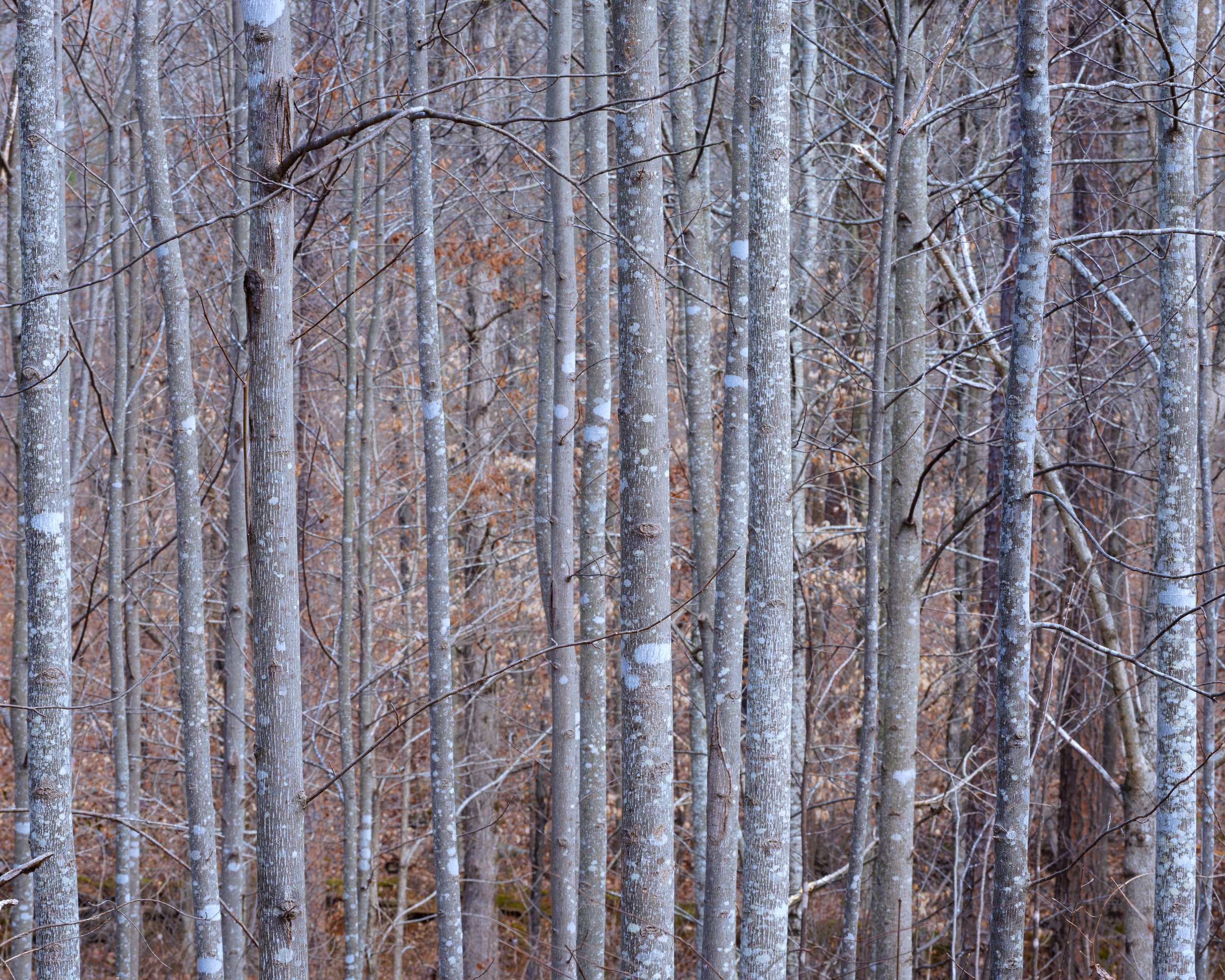
Guidelines, 2/23/26
Organizing Chaos and the Dying Pine
Winter has exposed the skeletons of trees, and I find myself stopping not because I’ve reached a destination, but because a specific contrast of color and display of branches demand my stillness. Still half asleep, I stop long enough to set up my tripod and make a few frames of a fallen pine, carefully aligning and balancing the elements.
The brown, unspecial tree is my first find of the day. To most, it would look like a mess of dead wood, but in the quiet morning’s glow, it feels like a deliberate sculpture. I’m drawn to the rhythmic verticality of the branches and the chaotic reach of rust-colored needles. A “trophy” hunting morning would’ve seen me sprinting past this scene without a glance.
In this corner of the state, the forest is a dense tapestry of Shagbark Hickory, Mountain Laurel, and over a hundred other tree species. Even now, the Ironwood and American Beech hold onto their dry, papery leaves, rattling in the wind like a ghostly audience as Fern and I pass by. It’s a subtle beauty you only notice in the present moment, when you’re not busy chasing a photo that may or may not come to be.
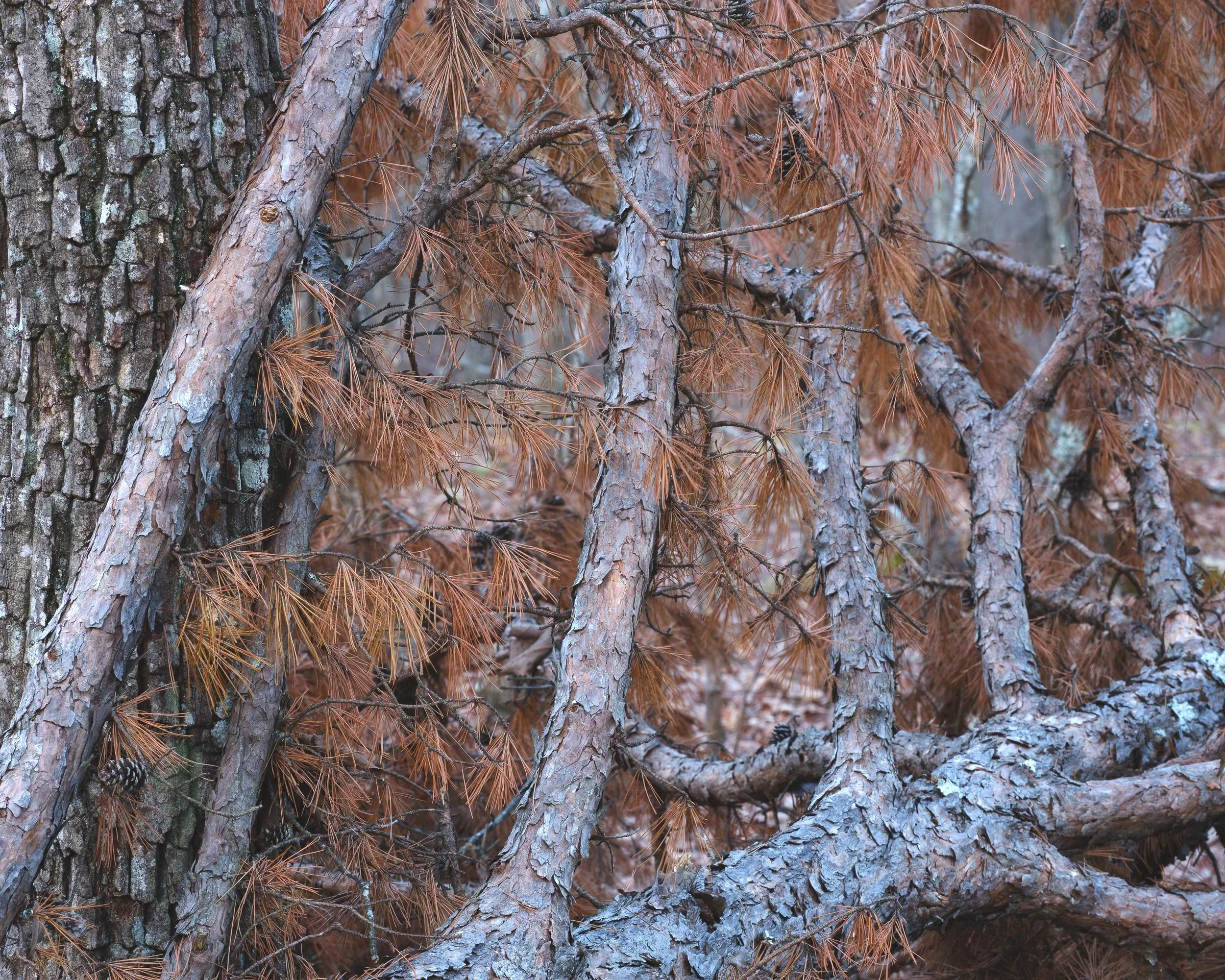
Fallen, 3/13/26
Slowing down here isn’t just about the physical walk; it’s also about the technical patience required to organize chaos. I spend several minutes adjusting my tripod in tiny ways - leaning, crouching, and weaving my body around the sapling directly behind me - trying to find a balance where the heavy bark of a standing oak can anchor the image without overwhelming the delicate, dying pine. The “tripod slow dance” reliably grounds me in intention.
By sitting with this scene, I begin to see it as a study in transition. The life cycle of the forest floor is usually hidden by the lush, buggy chaos of summer. At this point in the morning, while the reality of my job persists, the cortisol is gone and the sting of the 5:30 AM wake-up has been replaced by a quiet curiosity. I know I’m making a picture, but it also feels like I’m speaking with a familiar friend.
These woods are a 'pocket' wilderness - a resilient stretch of secondary growth that has seen loggers, miners, farmers and homesteaders come and go, now reclaiming its humble identity one season at a time. It’s a reminder that even a familiar ridge can feel vast, if you give it time.
Finding Ritual in the Boulder Field
Now mid-morning, the light has turned harsh. Not too many years ago, I might have seen the lack of clouds as a reason to head back to the car. But since I have no trophy to collect, Fern and I just keep wandering until we discover a massive boulder field tucked away in the gorge.
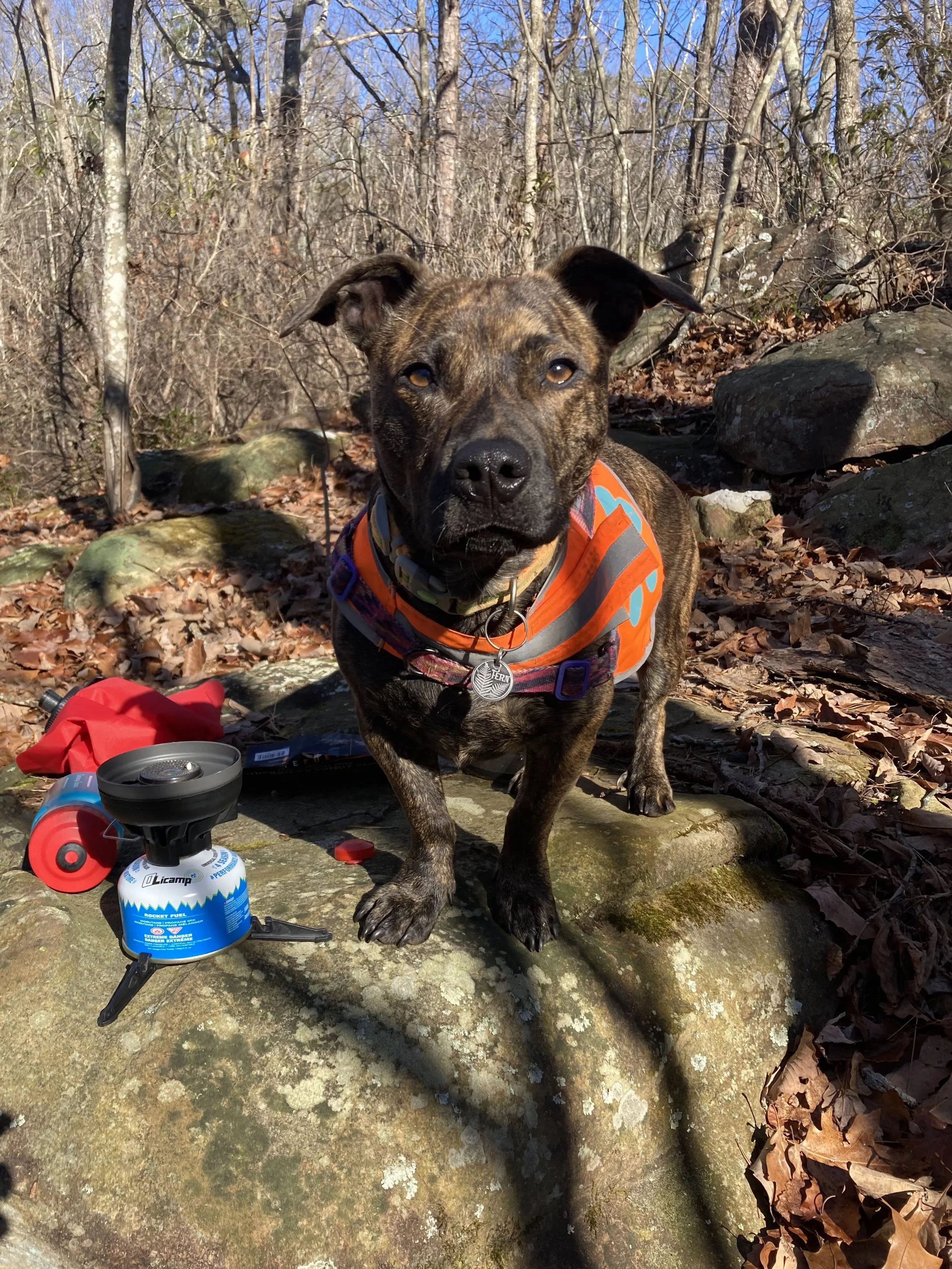
I make a quick meal using my Jetboil, more out of ritual than hunger (though I am pretty hungry by now). While the water heats, I pull out my small pocket notebook. I’ve found that jotting down messy thoughts is an indispensable tool for finding the right headspace. I first write down physical observations - lichen, birdsong, pinecones, wind - and then look inward to record what I feel, without judgement or ego: frustration, relief, confidence, gratitude.
This simple act of stopping, noticing, and identifying has helped me find perspective, even purpose, when I’ve felt scattered and creatively lost in the woods. It forces me to physically pause, use my mind, and assign words to things that bother or elate me. And more often than not, it helps me to see what I couldn’t before.
I describe to Fern the irony of sitting in a prehistoric boulder field while worrying about incomplete tasks and unread emails. She seems to get it.
The Texture of Time
My favorite image of the day isn’t a grand vista - it’s the strange skin of a rounded boulder that anchors the sloping hillside. After eating, the harsh light I initially dreaded begins to work in my favor, raking across the stone and revealing a reptilian, hexagonal texture I’ve never seen on this side of the mountain.
There is nothing complicated about the setup: Fern stands guard on top of the rock while I do my trusty “slow dance” and zoom in, finding a nice balance in the ancient grooves. The scene makes me feel glad I hadn’t been rushing around; had I been, I surely would have walked right past this unassuming monument to history written in lichen and shadow.
By the time I pack my gear to get moving again, stress has been replaced by a genuine sense of gratitude. The work emails are still waiting, but my internal rhythm has changed. Slowing down hasn’t just given me a better photograph; it’s given me my day back - and much more.
Older, 3/13/26
Carrying the Quiet Home
As Fern and I eventually make our way back to the truck in the late morning, the mountain feels different than it did at 6:00 AM. The air is still cold and the birds are calling loudly, but the “urgent” static in my head has settled into a steady, comfortable silence.
I’ve realized that the value of these slow mornings isn't just found in the frame of a boulder or a pine tree; it lives in the ability to carry that patience back into the day-to-day. The next time a last-minute crisis hits my inbox, I can return to that quiet boulder field, and how I found the one image I like best.
Out here, whether the final image is good doesn’t make much difference to me. What matters is that I’m present with my breathing, my steps, and a happy mutt at my side. The pull to produce softens, and without conscious effort, I begin to prioritize the experience of the place itself. It has taken considerable practice to arrive at such an “unproductive” headspace, untangling nearly twenty years of corporate wiring, and I feel a quiet gratitude for it.
Slowing down is a choice we get to make over and over again, in any context. When the truck engine turns over, I glance at the dented travel mug in the cup holder and recognize it again: the same choice, waiting for me at my desk, even in a cheap ceramic mug. I get home in time for lunch and spend the afternoon calmly catching up on the duties I’d set aside, working with a focus that felt out of reach just a few hours earlier.
By prioritizing the experience over the output, we don’t just become better photographers; we become more resilient. The mountain will always be there, taking its time turning from winter to spring, reminding me that there is no rush. There is only the next step.
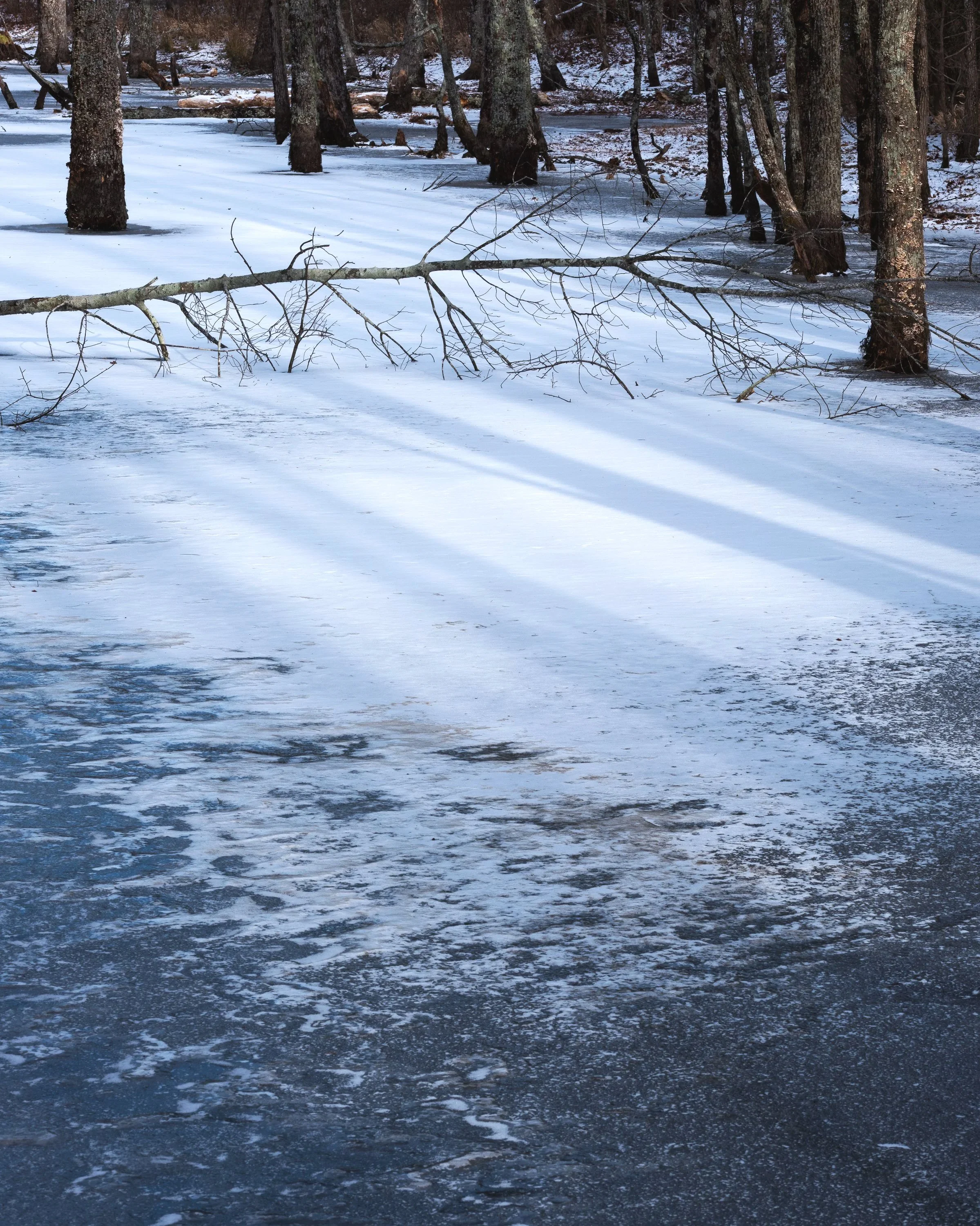
Concurrence, 2/12/26